As AI agents become more autonomous, the cost of losing control increases. An agent that plans, executes, and retries on its own can continue operating long after human intent has changed.
In these systems, observability is not enough. Alerts, logs, and dashboards tell you something is wrong, but they do not stop execution. When an agent needs to be halted, control must be immediate and absolute.
The Problem With Internal Stop Mechanisms
Many systems rely on internal checks to stop agents: conditional logic, prompt instructions, retry limits, or framework-level controls. These mechanisms assume the agent will cooperate.
In practice, internal stop conditions are fragile. They can be bypassed by bugs, misconfiguration, partial failures, or unexpected execution paths. Once an agent process is running, it often retains the ability to continue work even when it should not.
A kill switch that lives inside the agent is not a kill switch. It is a suggestion.
A Kill Switch Must Be External
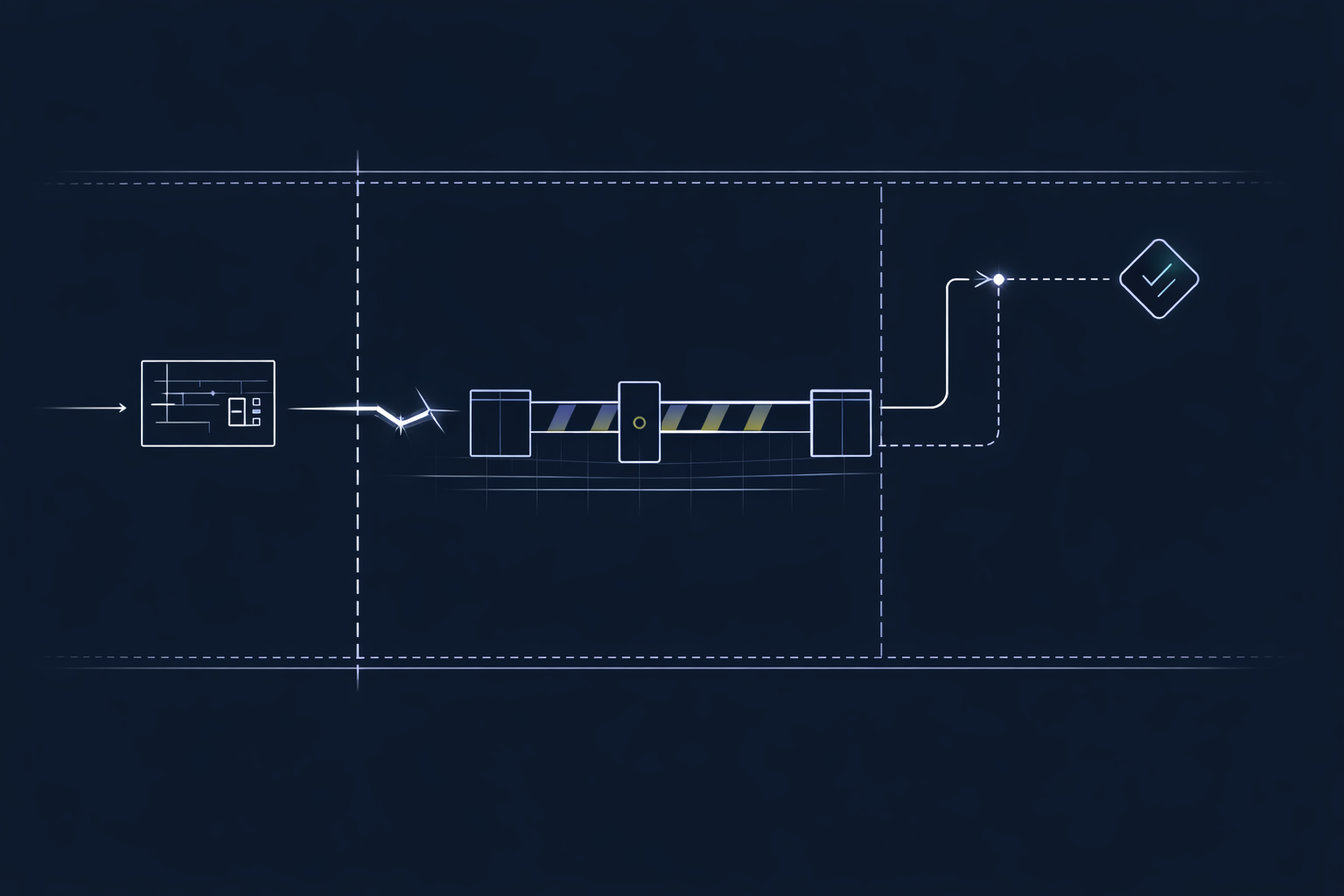
A real kill switch exists outside the execution logic. It does not rely on the agent to decide whether it should stop. Authority lives elsewhere.
This requires a separation between execution and permission. Agents execute work, but they do not grant themselves the right to do so.
When permission is withdrawn externally, execution must stop. No redeploy. No configuration change. No cooperation from the agent.
Startup Validation Is the First Kill Switch
The most reliable point of control is startup. If an agent cannot validate permission when it starts, it must not run.
This prevents unauthorized growth, leaked credentials, and unintended replicas. It also ensures that execution boundaries are enforced before any work occurs.
However, startup validation alone is not sufficient. Systems also need the ability to stop agents that are already running.
Revocation as a Kill Switch
An external kill switch is implemented through revocation. When permission is revoked, the execution surface loses the ability to continue work.
This model treats each agent instance as a device with an identity. That identity can be revoked at any time. Once revoked, validation fails and execution must halt.
Because the decision lives outside the agent, the agent cannot override it.
Why This Matters in Practice
Consider common failure scenarios:
- A runaway agent enters a loop and begins consuming resources
- A leaked key allows an unintended instance to start
- An agent behaves incorrectly while unattended
- A system must be shut down immediately during an incident
In each case, the response must be immediate. Waiting for redeploys, configuration propagation, or framework-level shutdowns introduces unnecessary risk.
Control From Anywhere
External kill switches also enable remote control. Authorization can be withdrawn from anywhere, including environments where direct access to the runtime is not available.
This is especially important for distributed systems, long-running agents, and AI workloads that operate continuously across environments.
Kill Switches Are Infrastructure
A kill switch is not a convenience feature. It is infrastructure. Systems that cannot be stopped reliably are not truly under control.
By separating execution from authority and enforcing permission at the device level, kill switches become reliable, immediate, and auditable.
MachineID provides external, device-level enforcement for AI agents and execution systems, enabling real kill switches through revocation rather than cooperation.